Designing for Atmosphere in Hospitality Interiors
In hospitality design, layout and function are essential — but they are only part of the story.
The most memorable spaces are those where atmosphere is carefully considered. Where every element, from lighting to material choice, contributes to how the space feels as much as how it works.
Beyond Layout
A well-planned layout ensures that a restaurant operates efficiently, supporting both staff workflow and customer movement.
However, it is often the more subtle decisions — proportion, materiality and spatial definition — that shape the overall experience.
Creating a sense of intimacy within an open space, or clarity within a complex one, requires careful consideration of how people move, sit and interact within the environment.
Material & Light
Materials play a central role in defining atmosphere.
Natural finishes, such as timber, introduce warmth and tactility, while darker tones can create depth and focus. When paired with considered lighting, these elements help establish a calm and refined environment.
Lighting, in particular, is critical. It should support function while also shaping mood — highlighting key features, softening edges and guiding the eye through the space.
Detail & Integration
In high-end hospitality settings, the success of a design often lies in how well functional elements are integrated.
Storage, service areas and operational requirements need to be carefully resolved so that they support the space without disrupting the overall experience. Concealed detailing and bespoke joinery allow these elements to remain present but unobtrusive.
Case Study — Restaurant Sat Bains
At Restaurant Sat Bains, we worked on refining key areas of the space to enhance both the guest experience and day-to-day operation.
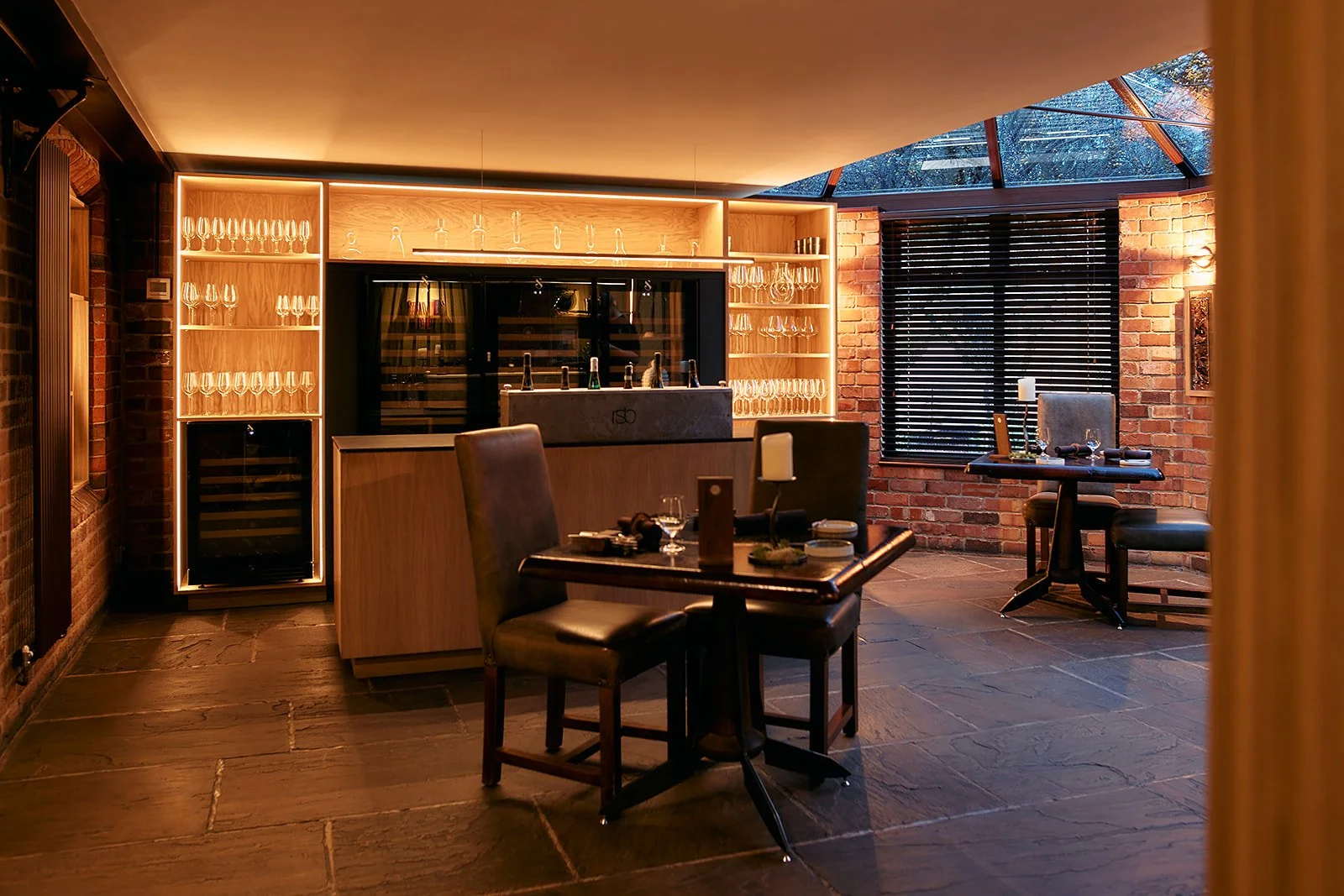
A central sommelier station was introduced to showcase the restaurant’s wine collection, designed with floor-to-ceiling storage and integrated lighting to create a sense of presence without overwhelming the space.
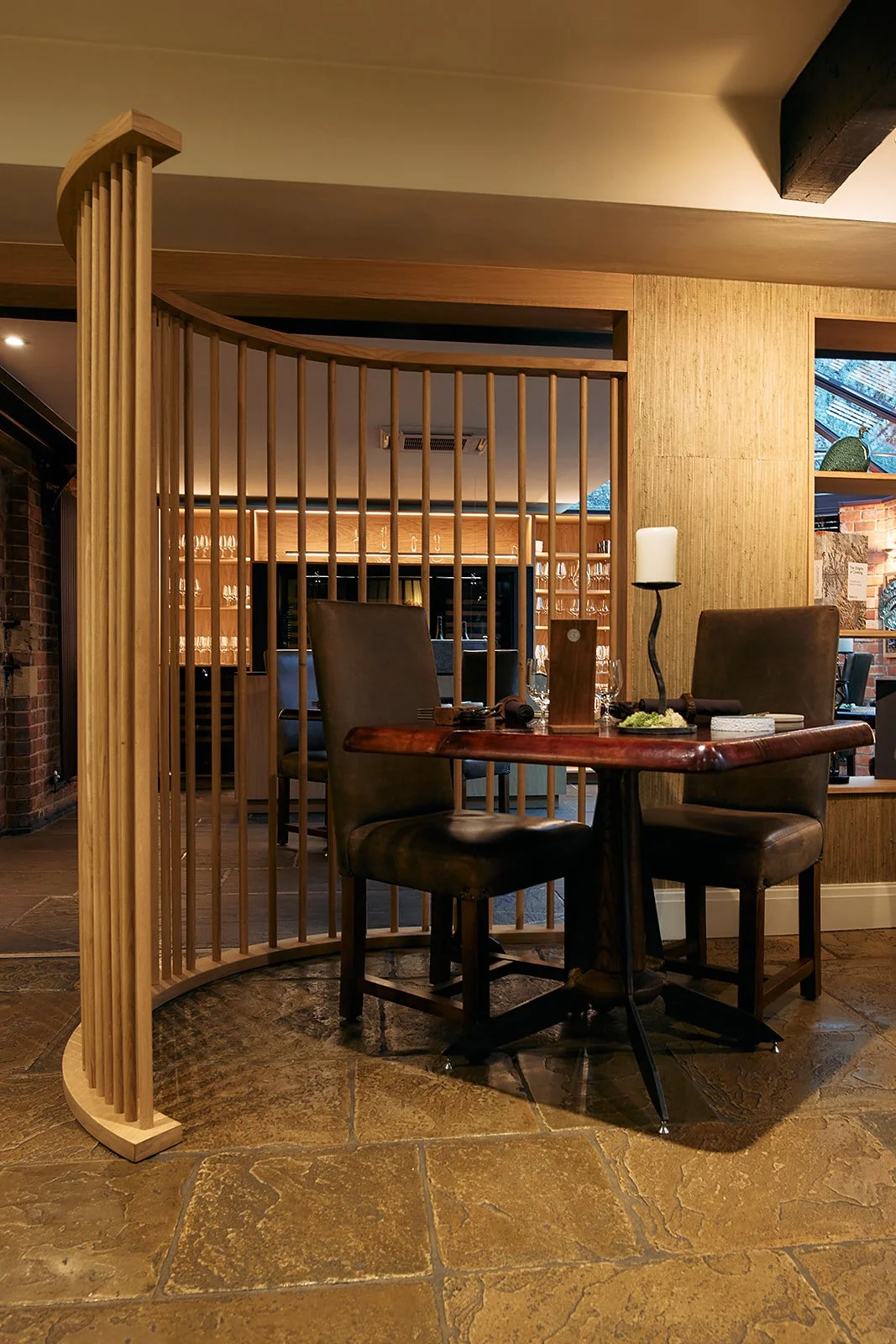
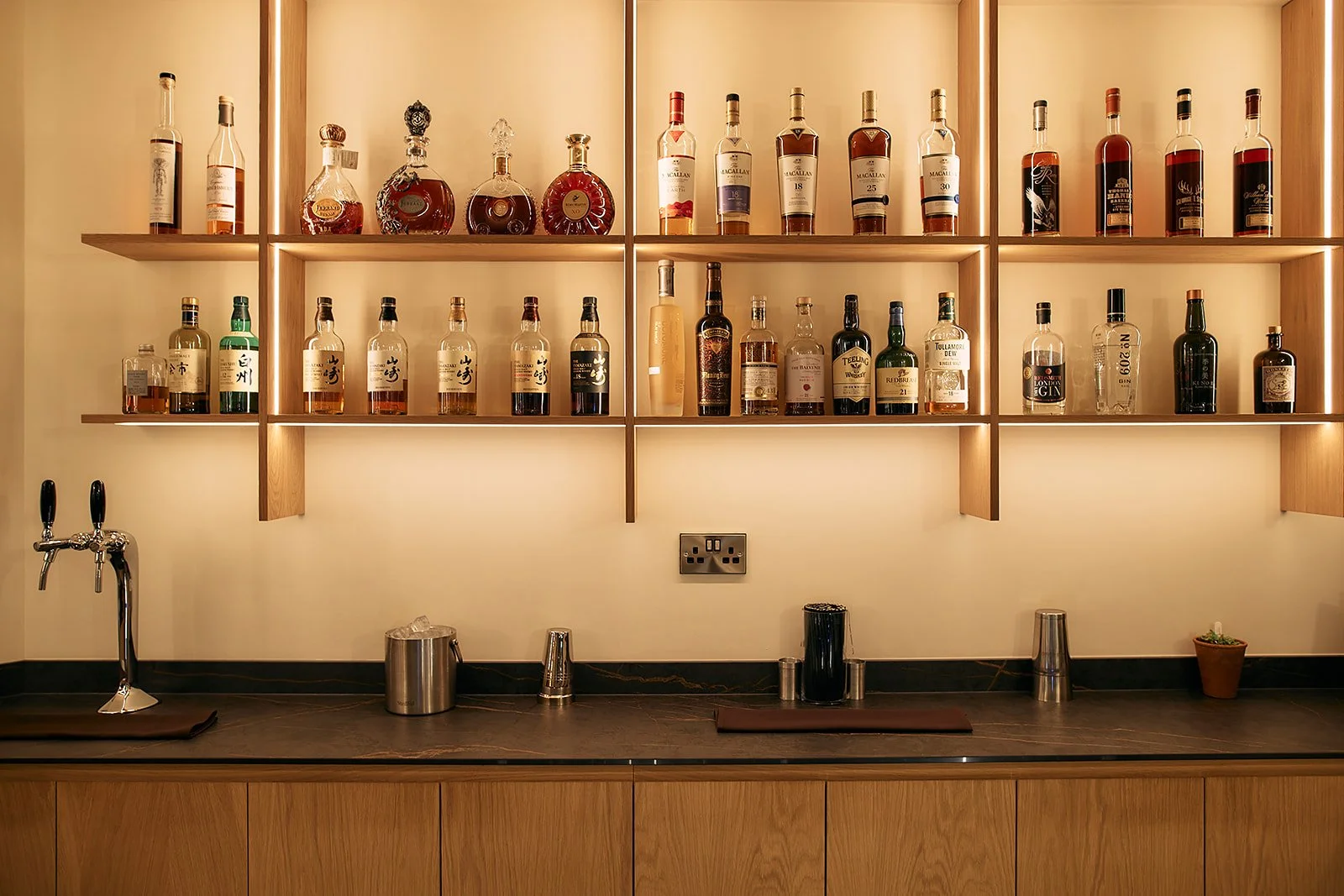
Alongside this, a new bar area and curved oak partition help define the layout more clearly, creating moments of intimacy within the wider dining environment.
Each intervention was designed to feel calm, precise and integrated — contributing to a more immersive and considered experience for guests.
Conclusion
The best hospitality interiors are those where every element is working together.
When layout, materials, lighting and detail are carefully aligned, the result is a space that not only functions well, but feels effortless to experience.