
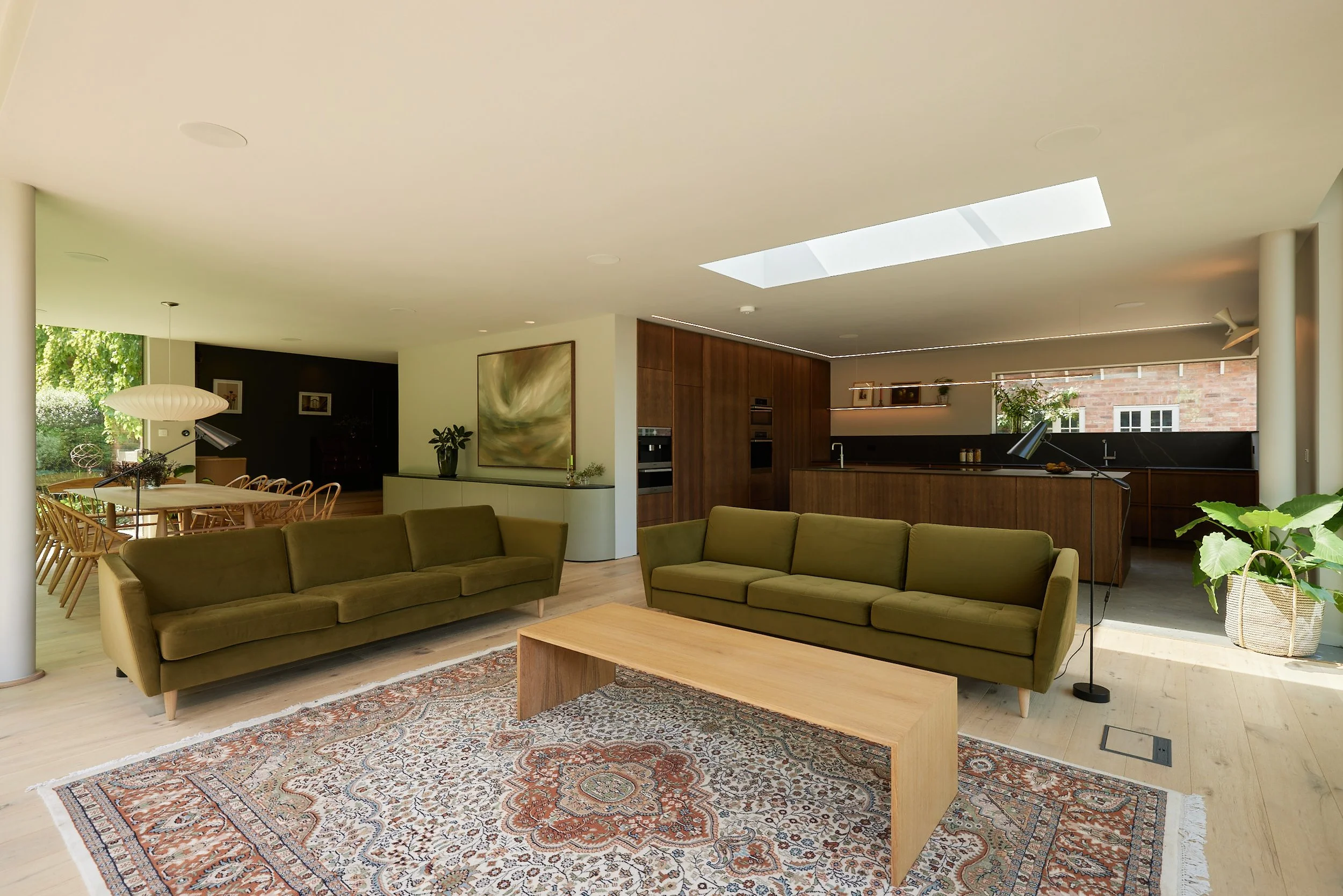
Creating Cohesive Open-Plan Spaces
Open-plan living has become a defining feature of many contemporary homes, bringing together kitchen, dining and living spaces into a single environment.
While this approach can create a sense of openness and light, it also requires careful consideration. Without a cohesive design approach, open-plan spaces can feel disjointed or lacking in character.
At Boyes Design, we approach open-plan interiors as a whole — considering how each area connects, both visually and functionally, to create spaces that feel calm, balanced and easy to live in.
Zoning Without Dividing
A successful open-plan space allows each area to feel distinct, without introducing physical barriers.
This can be achieved through subtle changes in level, the positioning of furniture, or the careful use of lighting. A kitchen island, for example, can define the transition between cooking and living areas, while maintaining an open and connected feel.
Rather than separating spaces, the aim is to guide movement and create a natural flow through the home.
Material Continuity
Materials play a key role in bringing an open-plan space together.
A consistent palette — whether through timber, stone or painted finishes — helps create visual continuity across different areas. This doesn’t mean everything needs to match, but rather that materials are carefully selected so they complement one another.
By reducing visual noise and repetition, the overall space feels more considered and cohesive.
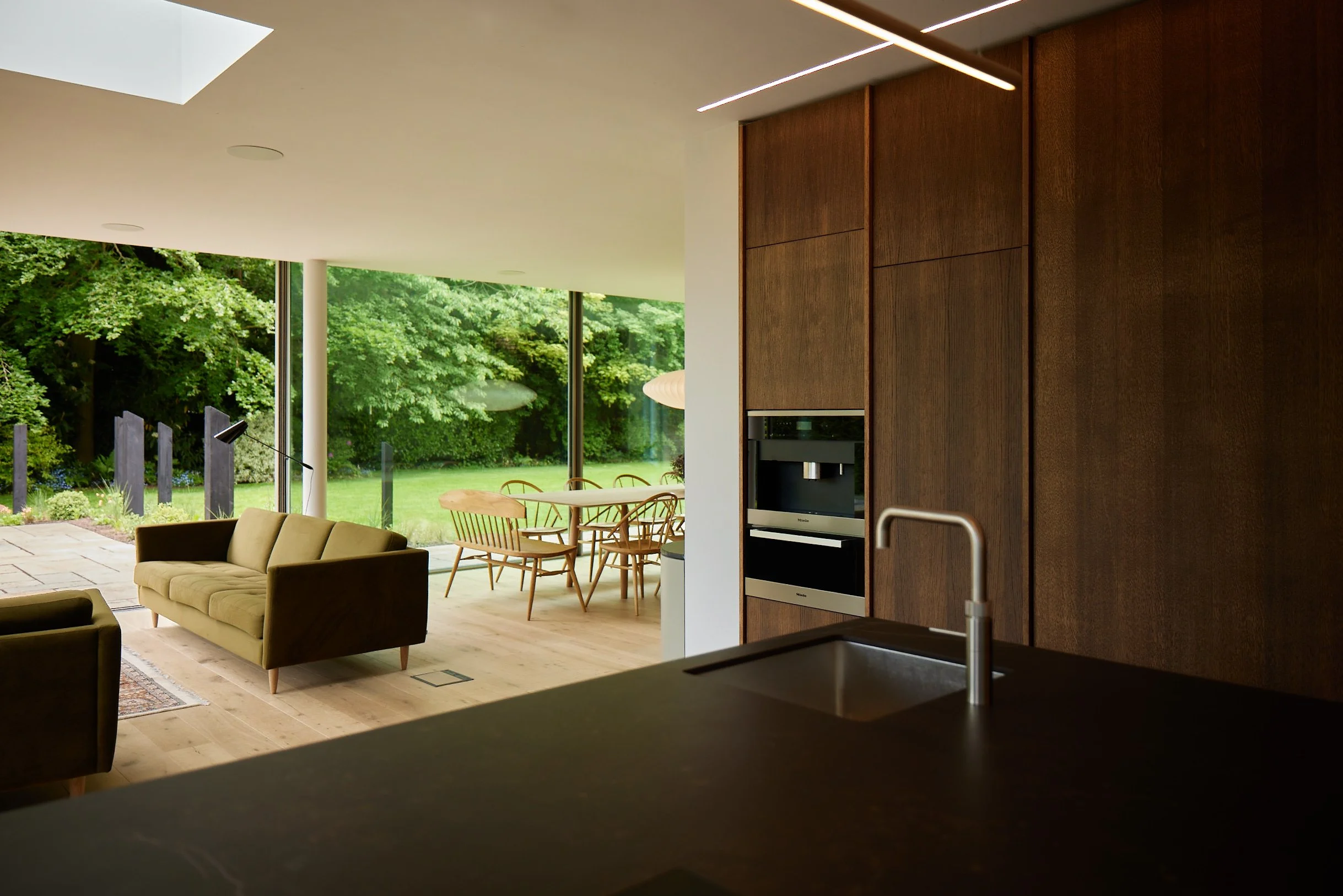
Joinery as a Connector
Bespoke joinery can help unify an open-plan interior, linking different zones through consistent detailing and materiality.
From kitchen cabinetry to integrated storage and media units, joinery elements can be designed to sit naturally within the architecture, reinforcing the overall composition of the space.
This approach allows practical requirements to be resolved while contributing to a calm and balanced interior.
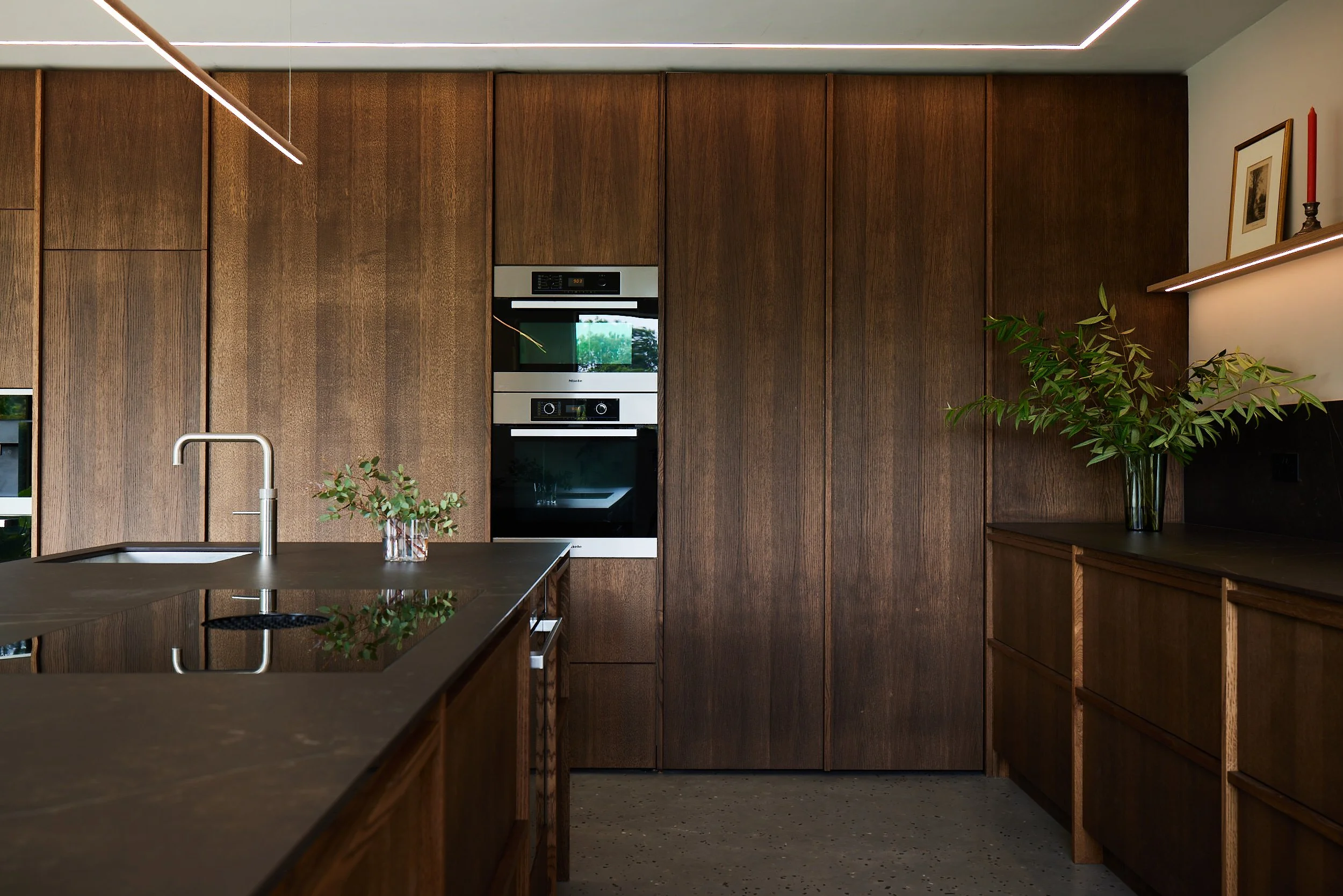
Light and Atmosphere
Light plays an important role in shaping how an open-plan space is experienced throughout the day.
Natural light can be used to draw attention to key areas, while layered artificial lighting — including task, ambient and feature lighting — helps create a sense of warmth and atmosphere in the evening.
Considering lighting early in the design process ensures that each area functions well while contributing to the overall feel of the space.
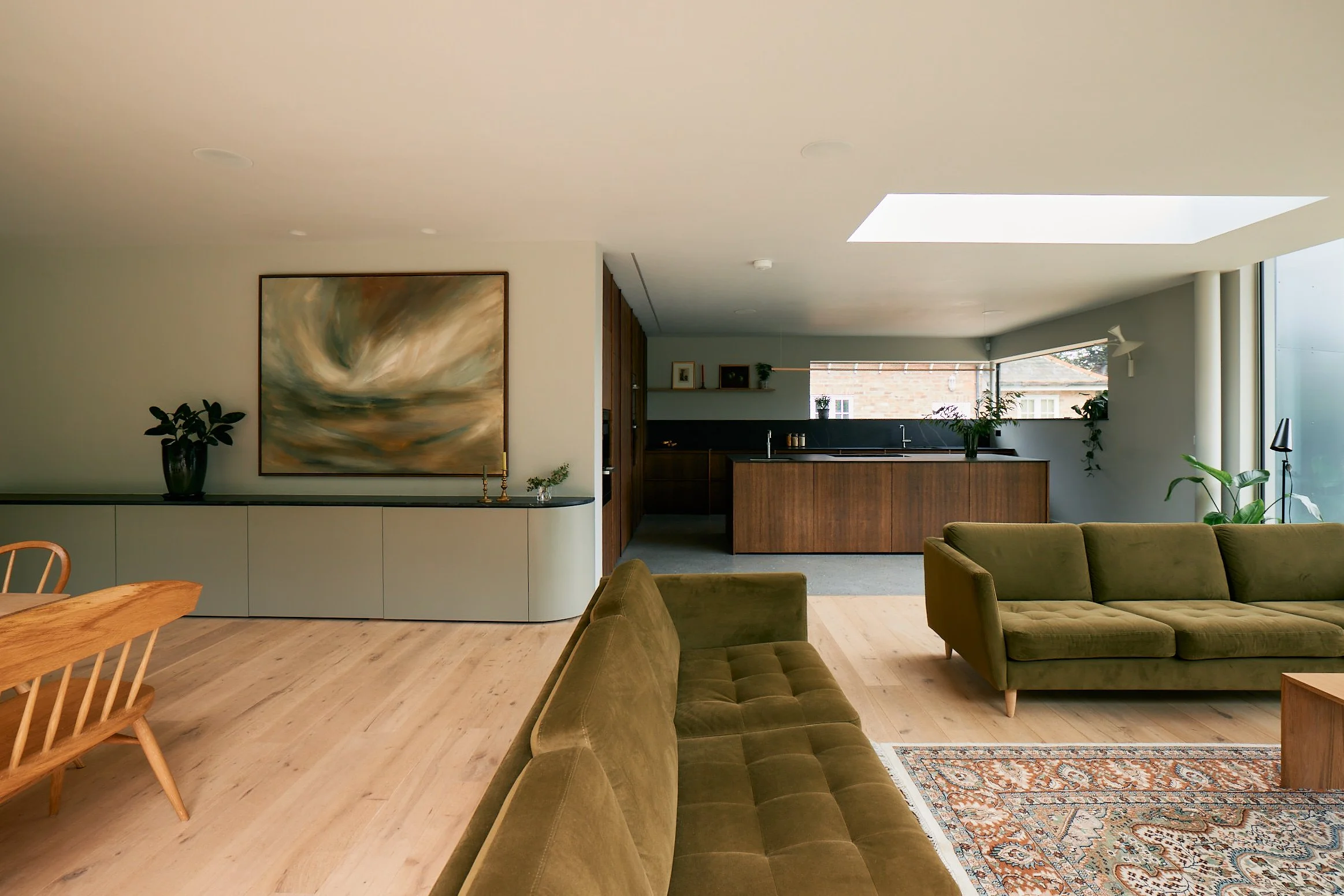
When approached thoughtfully, open-plan living can create spaces that feel both practical and refined.
By considering layout, materials, joinery and light together, it’s possible to create interiors that feel cohesive and connected — spaces that support everyday living while maintaining a calm and timeless quality.