
The Importance of Joinery Detail in Kitchen Design
When designing a kitchen, it’s easy to focus on the overall layout, materials and appliances.
However, it is often the finer details — the elements that are not immediately obvious — that define how a space feels and performs over time.
Beyond the Surface
Joinery is at the heart of any kitchen.
While materials and colours set the tone, it is the detailing within the cabinetry that shapes the experience of using the space day to day. The way a drawer opens, how a handle is formed, or how elements align visually all contribute to a sense of quality and cohesion.
These details are rarely the first thing noticed, but they are often what leave a lasting impression.
Refined, Integrated Design
Well-considered joinery should feel integrated rather than applied.
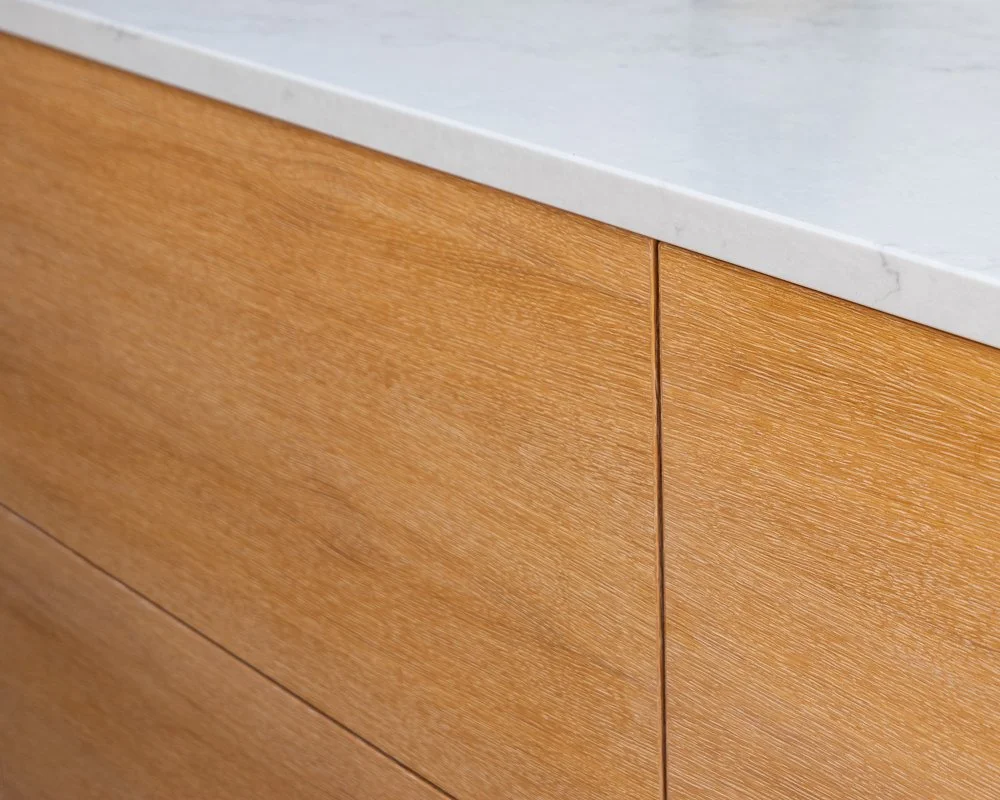
Instead of relying on standard solutions, bespoke detailing allows each element to be tailored to the space. This might include recessed handles, shadow gaps or carefully proportioned panels that create a clean and uninterrupted visual language.
The result is a kitchen that feels calm, balanced and considered, where every component works together.

Material & Craft
The relationship between materials and detailing is key.
Natural materials such as timber bring warmth and texture, while painted surfaces can introduce contrast and clarity. When these are combined with precise joinery, the outcome is both visually refined and highly functional.
Craftsmanship plays an essential role here, ensuring that each detail is executed with accuracy and consistency.
Case Study — Musters Crescent, West Bridgford
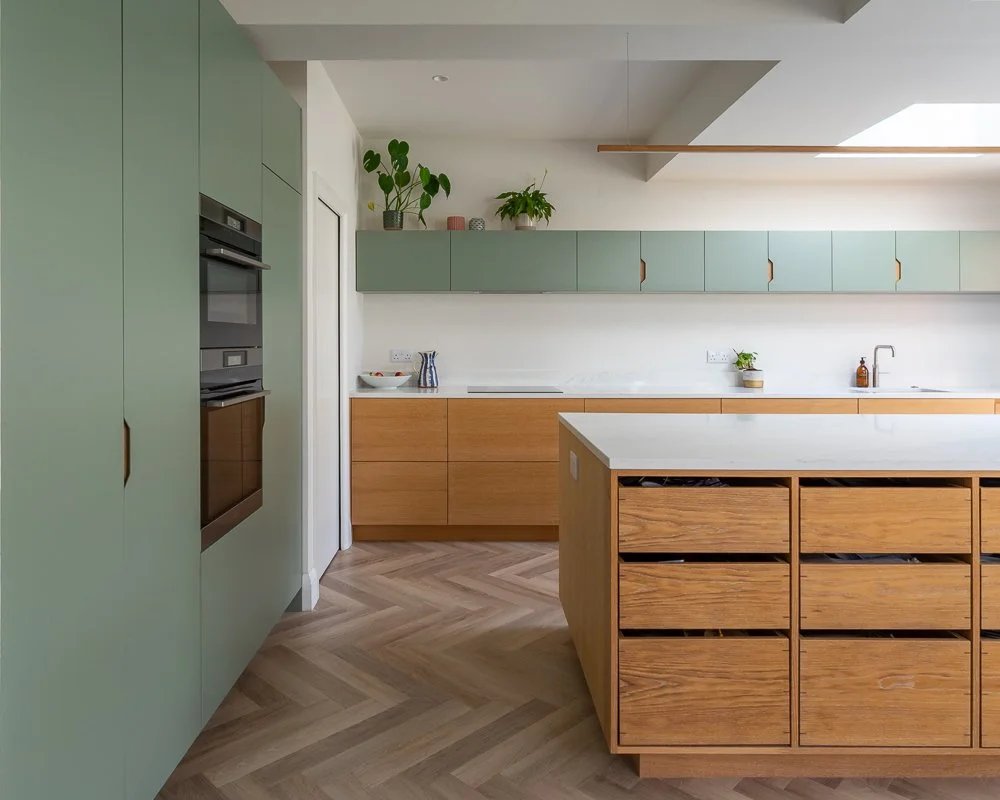
At this project in West Bridgford, the focus was on creating a kitchen defined by subtle, refined detailing.
Recessed oak handles were integrated within painted cabinetry, allowing the material contrast to become a feature without disrupting the clean lines of the design. Across the island, shadow gap detailing provides both a functional finger pull and a visual rhythm to the joinery.
These elements are understated, but together they shape the overall feel of the space — creating a kitchen that is cohesive, practical and quietly distinctive.
Conclusion
The success of a kitchen is often found in its details.
When joinery is carefully considered, it enhances not only the appearance of the space but also how it is used every day. Subtle decisions in design and craftsmanship can transform a kitchen from something functional into something truly refined.