What Makes Joinery Architectural?
Bespoke joinery is often thought of as furniture — cabinetry, wardrobes, storage.
But when it is carefully integrated, it becomes something more. It becomes architectural.
Architectural joinery doesn’t sit within a space; it shapes it.
It defines circulation.
It controls light.
It introduces rhythm and proportion.
It creates continuity between rooms.
When handled thoughtfully, joinery moves beyond function and becomes part of the structure of the home.
Defining Space Without Building Walls
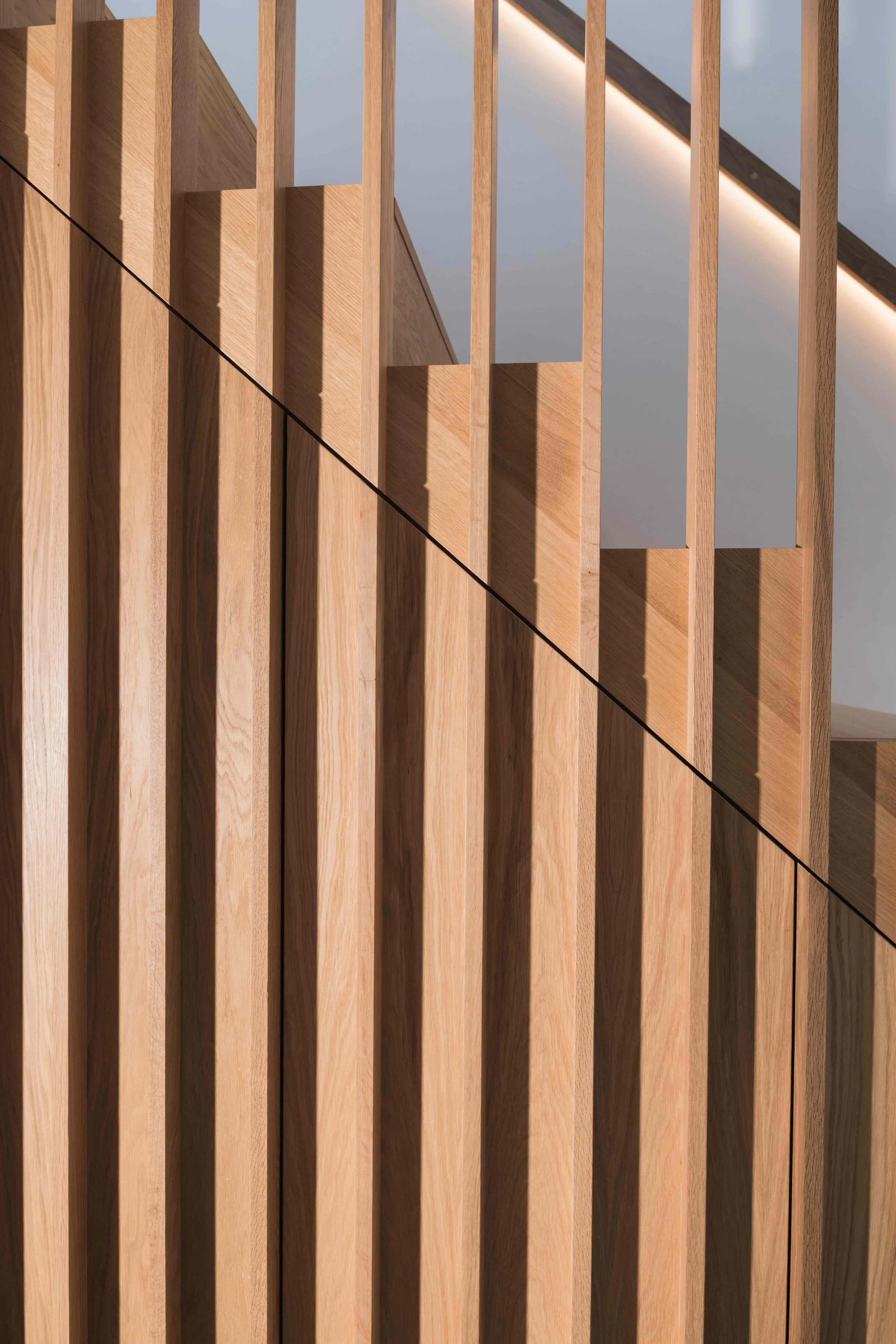
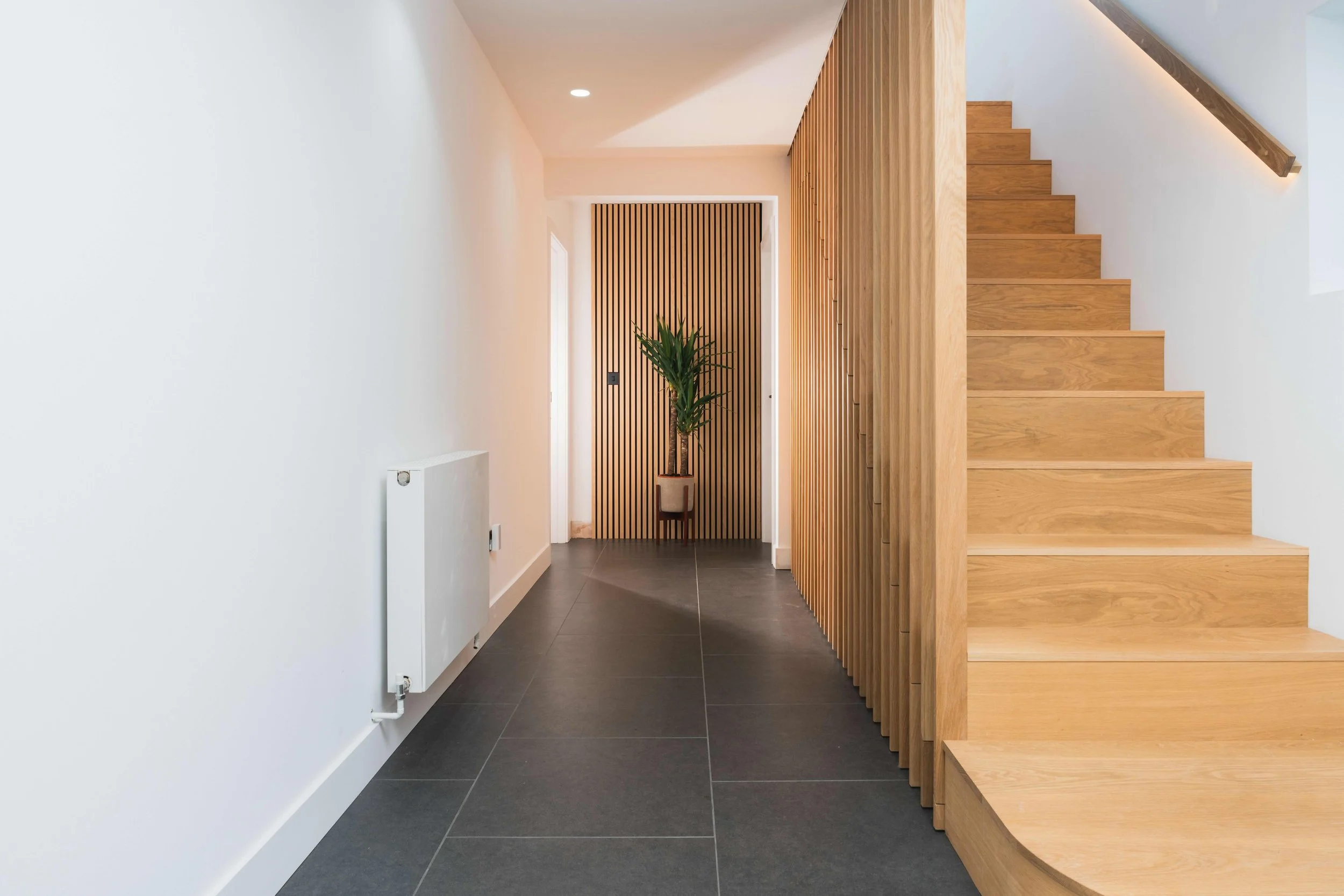
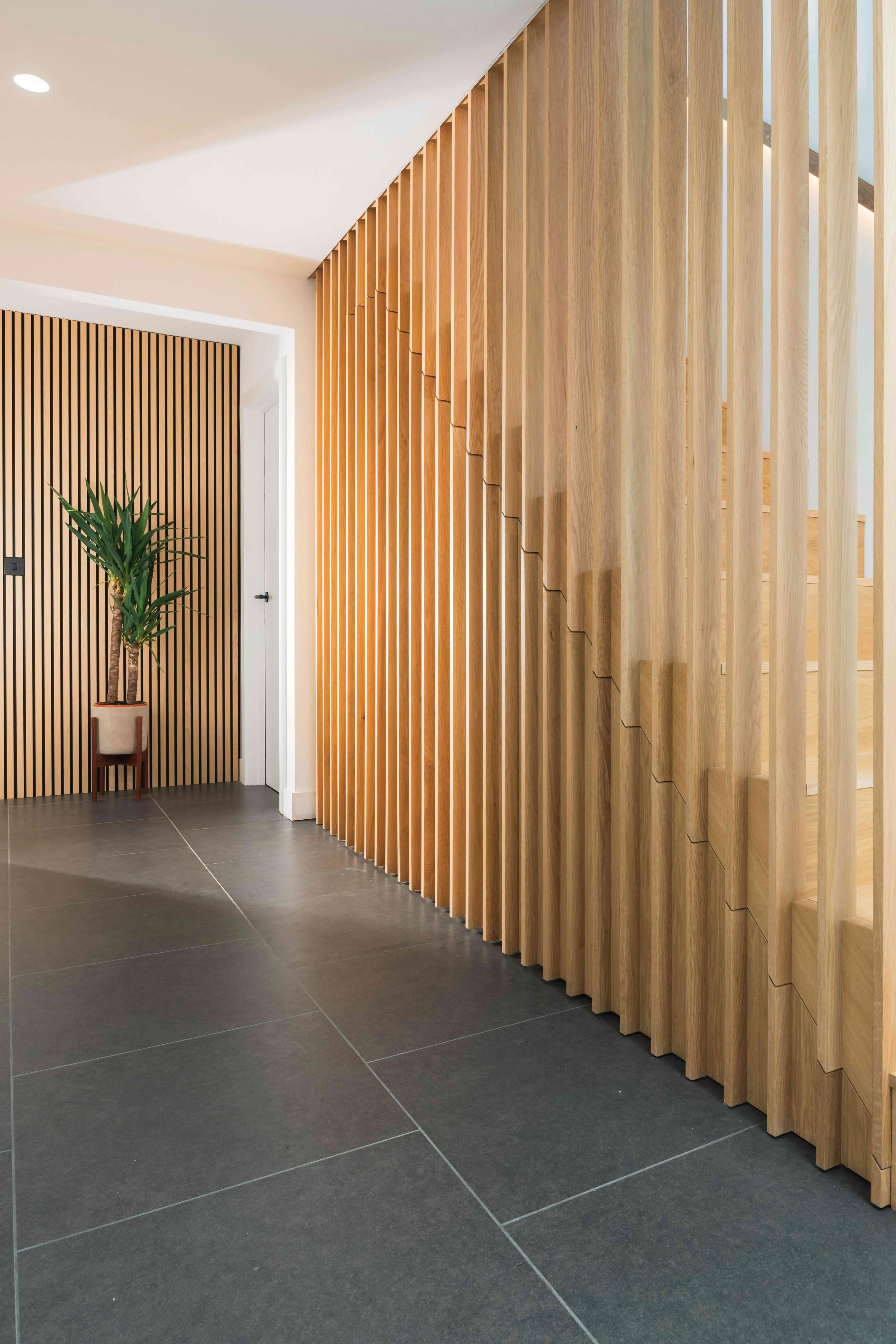
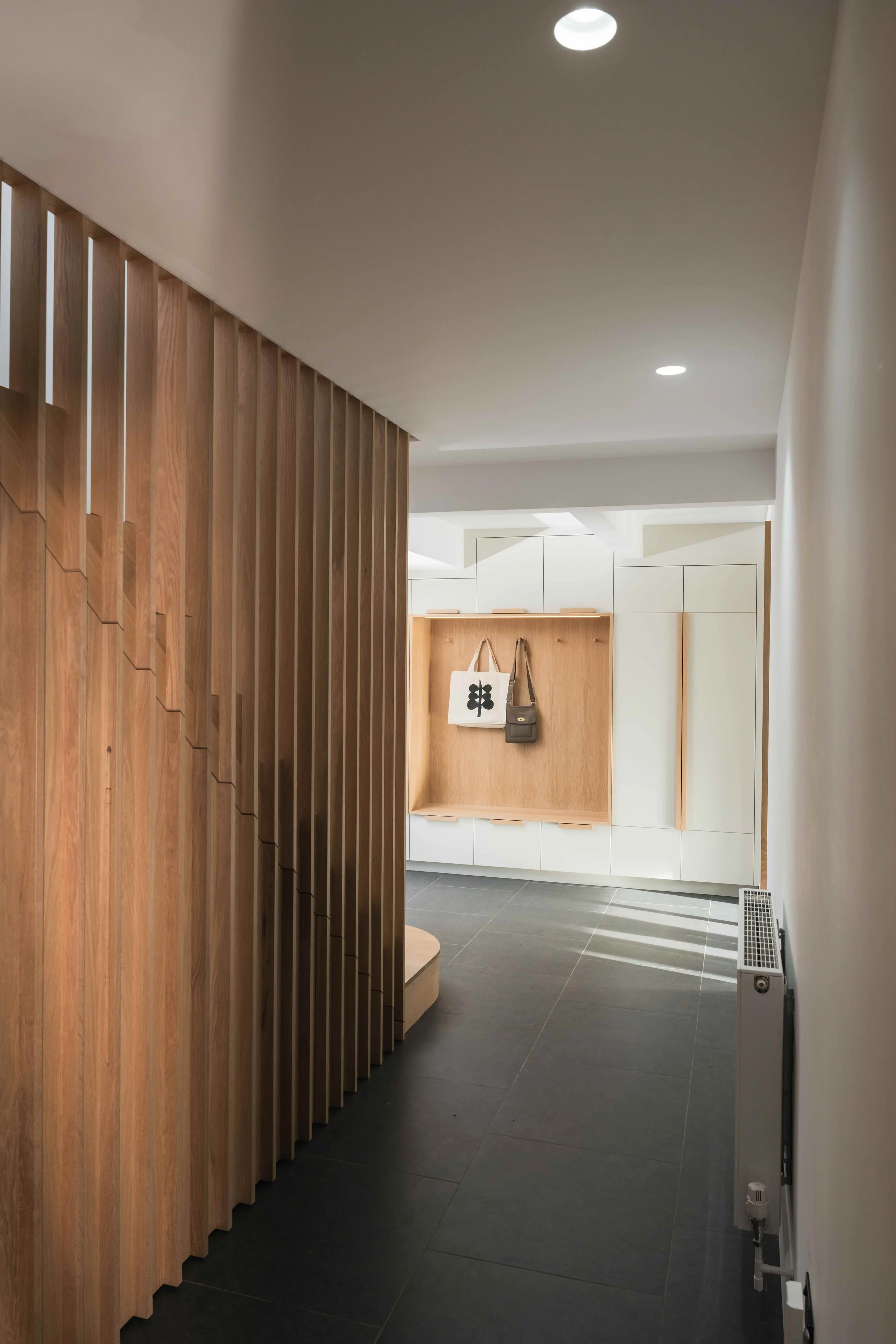
In this Edwalton project, vertical oak slats define the staircase without enclosing it. The detailing allows light to pass through while introducing warmth and rhythm to the entrance.
Rather than treating the stair as an isolated feature, the joinery establishes a clear spatial language that continues throughout the ground floor.
Making Use of Volume
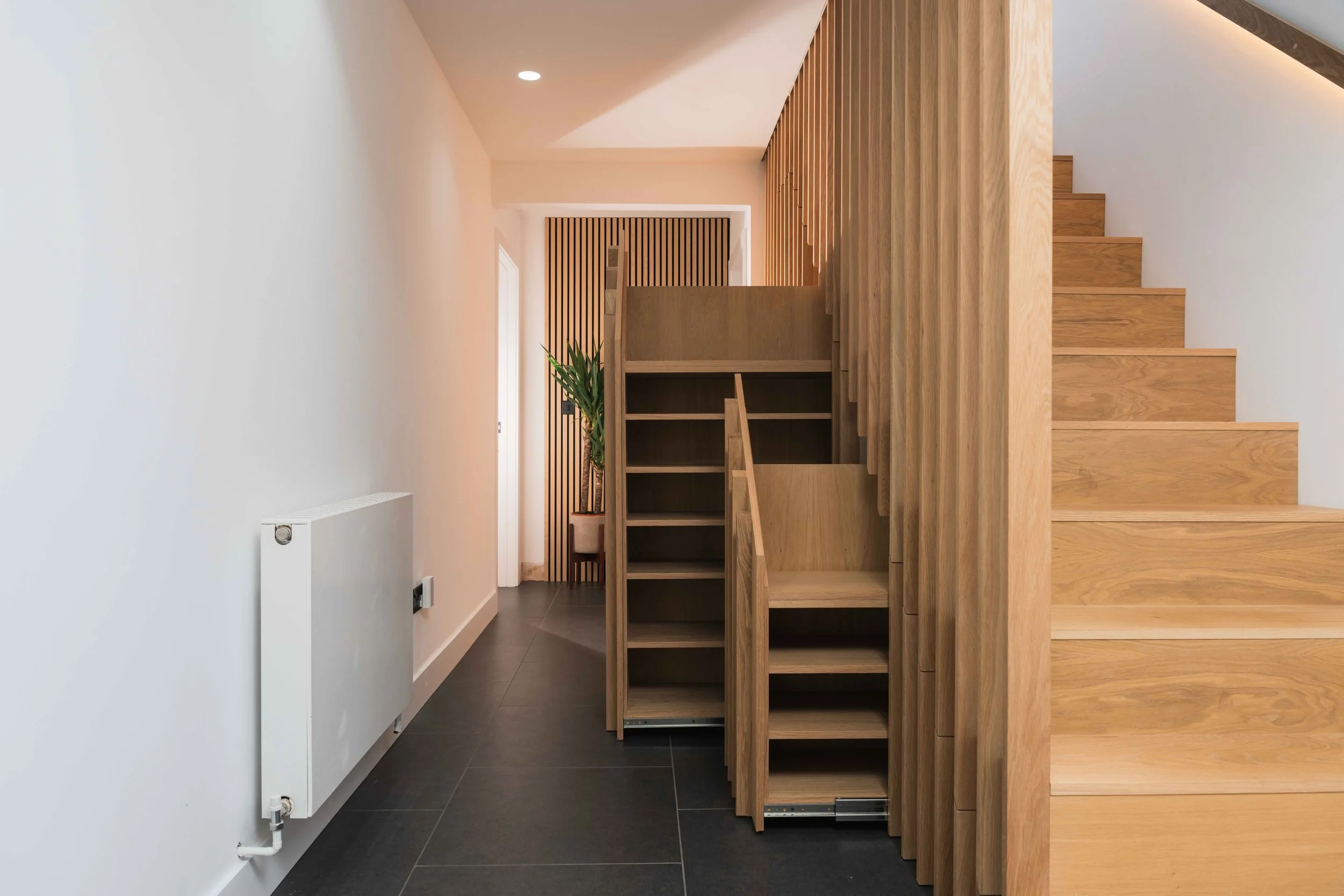
Architectural joinery also considers how every millimetre can be used with intention.
Integrated storage beneath the staircase makes full use of the volume, remaining visually quiet while supporting everyday function.
Nothing feels added on — it feels built in from the outset.
Creating Continuity
Material continuity plays a key role. When finishes, proportions and detailing are carried through adjoining spaces, the home feels cohesive rather than segmented.
This continuity is subtle, but it creates a sense of calm and order that’s immediately felt.
More Than Storage
For us, architectural joinery is about integration.
It’s about ensuring that cabinetry, staircases and built-in elements feel like they belong to the architecture of the building — not simply placed within it.
When joinery is considered at the same level as layout, lighting and proportion, it shapes how a space is experienced.
And often, it’s these integrated details that define the character of a home.