
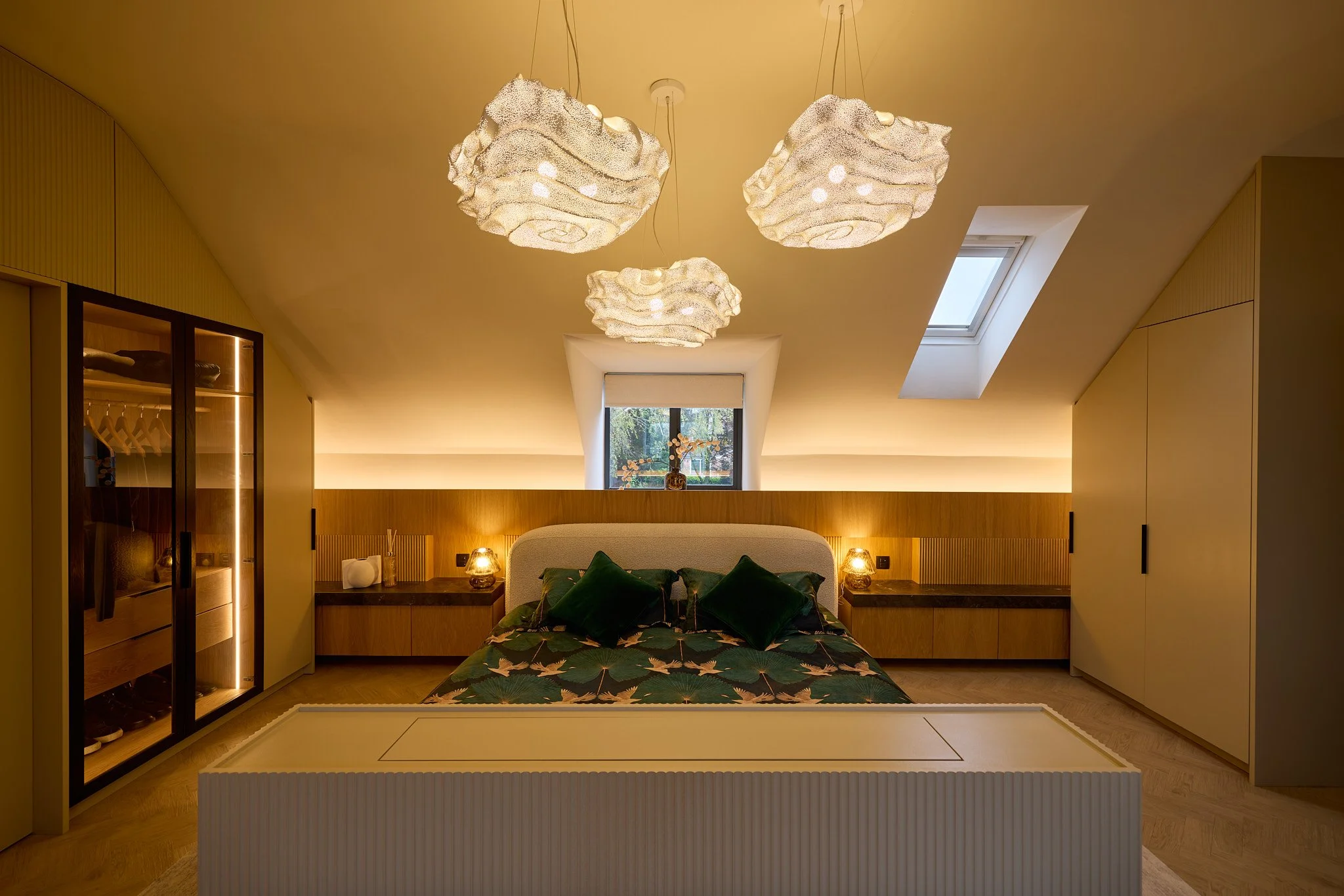
How Lighting Shapes the Feeling of a Home
Lighting influences far more than visibility within a home.
It shapes atmosphere, highlights materials and changes how spaces feel throughout the day. Thoughtfully considered lighting can make interiors feel calmer, warmer and more connected to everyday living, while also improving how spaces function practically.
When integrated into the architecture and joinery of a home from the outset, lighting becomes part of the overall experience of the space rather than simply a finishing detail.
Working With Natural Light
Natural light plays an important role in how interiors are experienced.
The orientation of a room, the positioning of openings and the relationship between spaces all influence how light moves through a home during the day. Thoughtful layouts and open sightlines can help maximise daylight, creating interiors that feel brighter, calmer and more connected.
At Pavillon, carefully positioned joinery and an open-plan layout allow natural light to move freely between the kitchen, dining and living areas, helping the interior feel cohesive throughout the day.
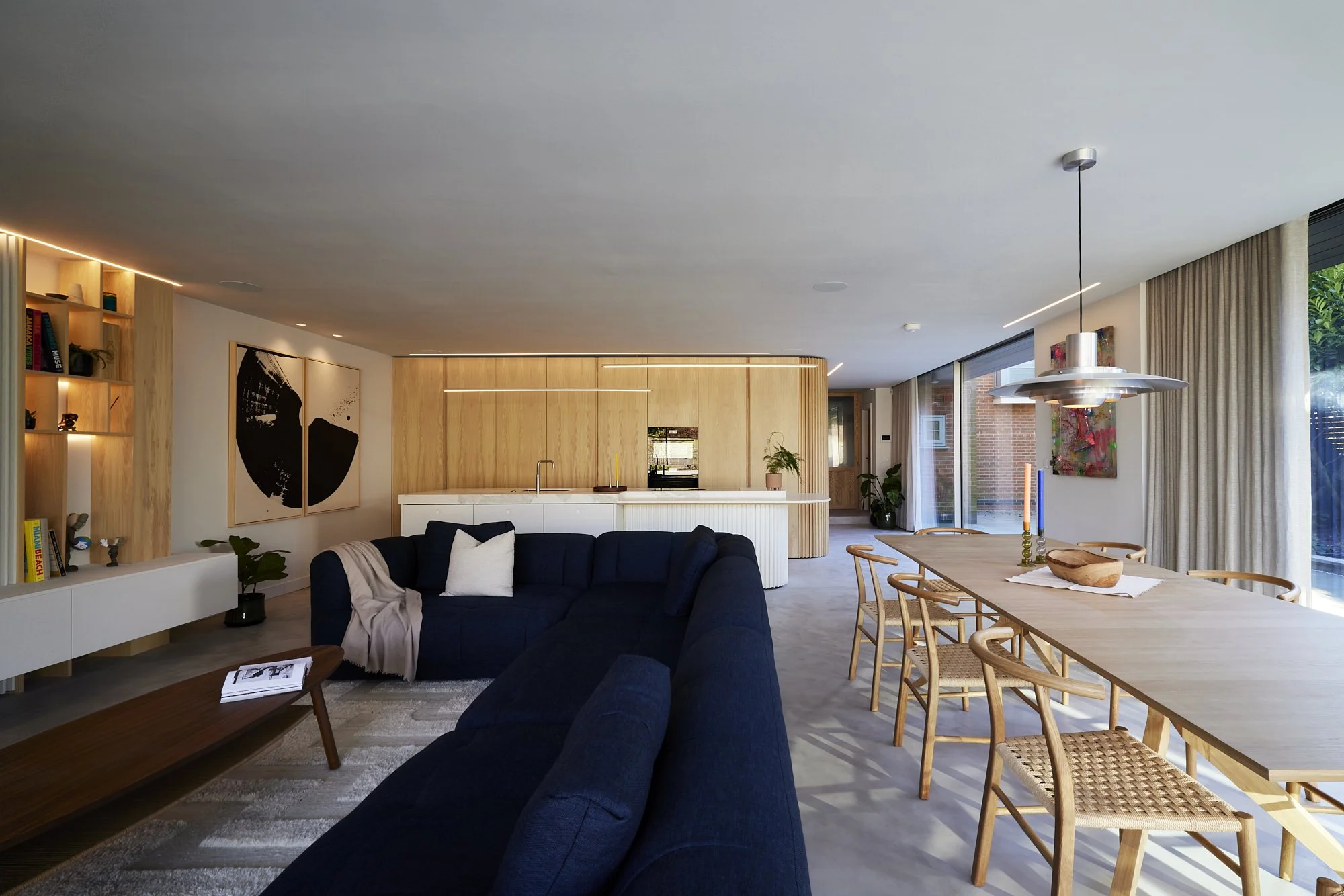
Layered Lighting Creates Atmosphere
Artificial lighting has an equally important role within the home.
Rather than relying on a single overhead source, layered lighting allows spaces to adapt throughout the day and evening. Wall lighting, concealed LED details and softer secondary lighting help create warmth and atmosphere while reducing visual harshness.
At The Leys, integrated lighting was carefully incorporated into the bespoke joinery to create a bedroom that feels calm, balanced and restorative during the evening.
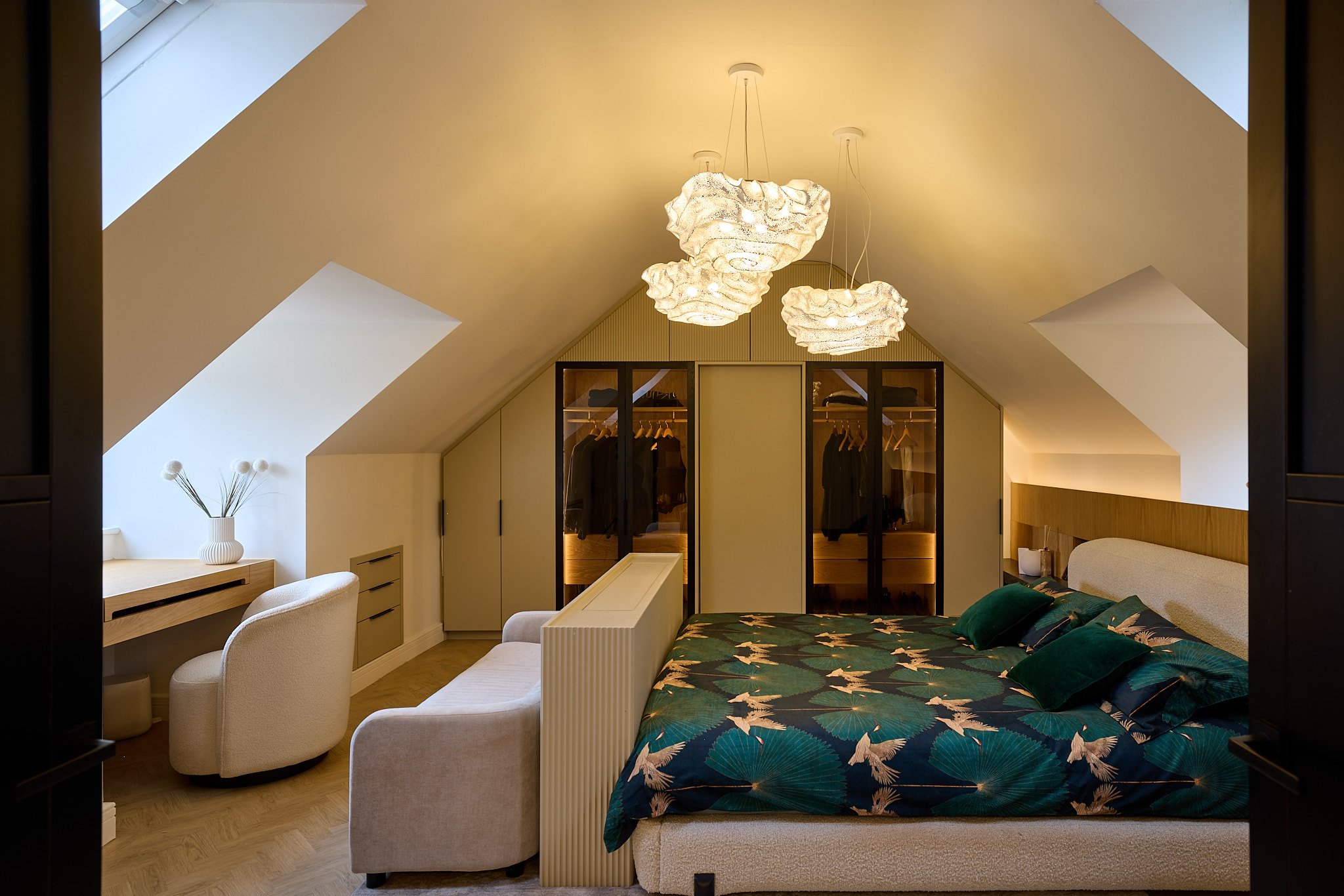
Lighting and Joinery Working Together
Lighting and joinery are often most successful when designed together.
Integrated lighting within shelving, wardrobes and cabinetry can subtly highlight materials and improve functionality without overwhelming the space visually. When carefully concealed, lighting becomes part of the architecture itself, helping interiors feel more refined and cohesive.
At Wynstay House in Nottinghamshire, warm lighting and tailored cabinetry were used throughout the kitchen and bootroom spaces to create a calm and welcoming atmosphere while supporting everyday routines.
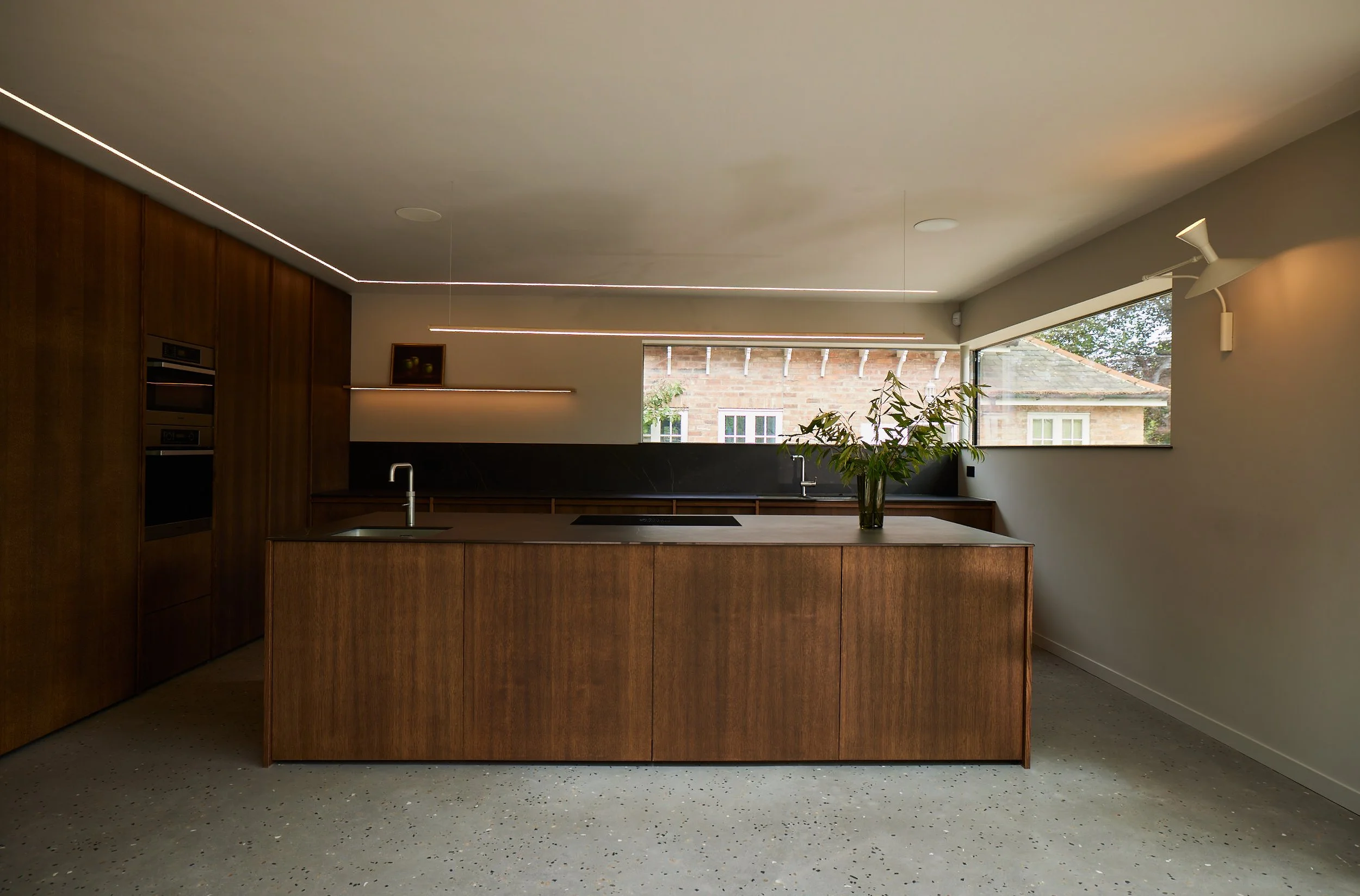
Lighting Supports Everyday Living
Good lighting design balances atmosphere with practicality.
Kitchens, living spaces and bedrooms all require different types of lighting throughout the day — from brighter task lighting during busy mornings to softer, more ambient lighting during the evening. Considering lighting early within the design process helps interiors feel more comfortable and intuitive to live in over time.
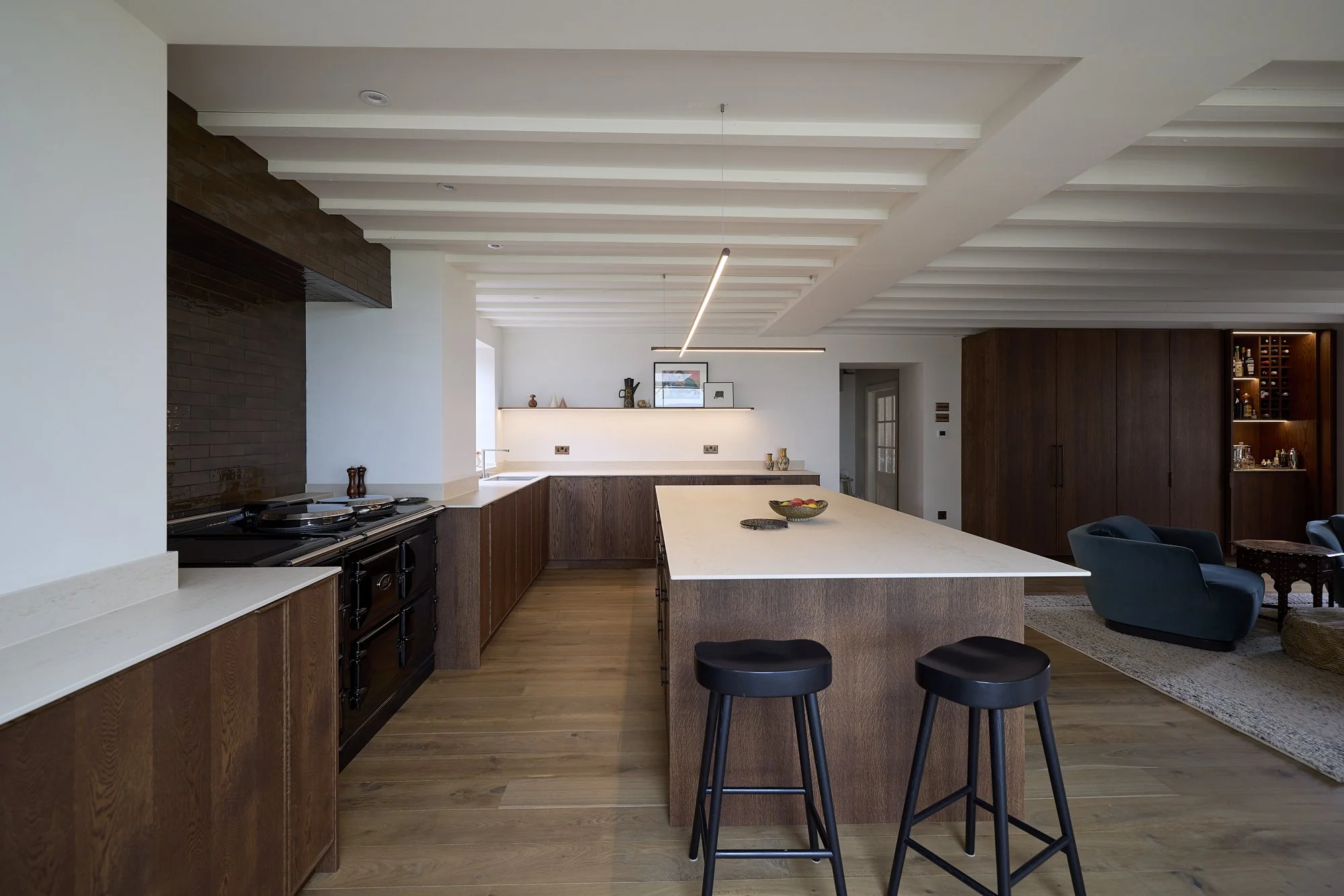
At The Old Vicarage in Derbyshire, carefully balanced lighting and dark timber joinery create warmth and depth throughout the open-plan kitchen and living spaces, allowing the atmosphere of the home to shift naturally from day to evening.
Conclusion
The most successful interiors consider lighting from the very beginning of a project rather than as a final addition.
When thoughtfully integrated into the layout, materials and joinery of a home, lighting helps create spaces that feel balanced, functional and comfortable to live in every day. Often, it is these quieter details that have the greatest influence on how a home feels over time.