
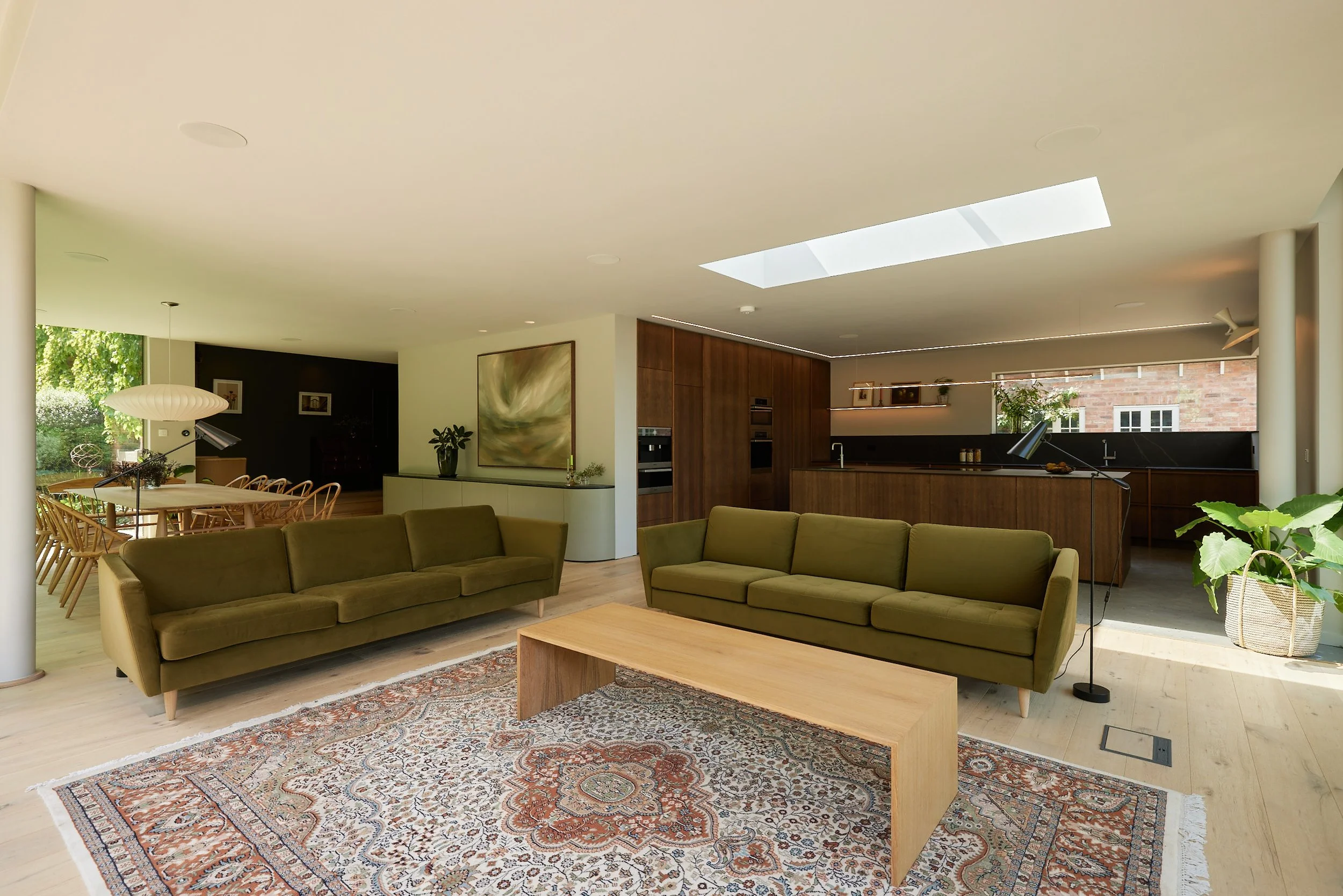
Designing Kitchens as Part of the Whole Home
Introduction
The kitchen is often considered the centre of the home — but it should never be designed in isolation.
The most successful kitchens are those that respond to the wider interior, connecting seamlessly with surrounding spaces and supporting how people live day to day. By thinking beyond cabinetry and appliances, it becomes possible to create spaces that feel cohesive, balanced and easy to use.
Looking Beyond the Kitchen
A well-designed kitchen considers more than just function.
How the space connects to dining and living areas, how natural light moves through it, and how people interact within it all play an important role. When these elements are considered together, the kitchen becomes part of a larger, more integrated environment.
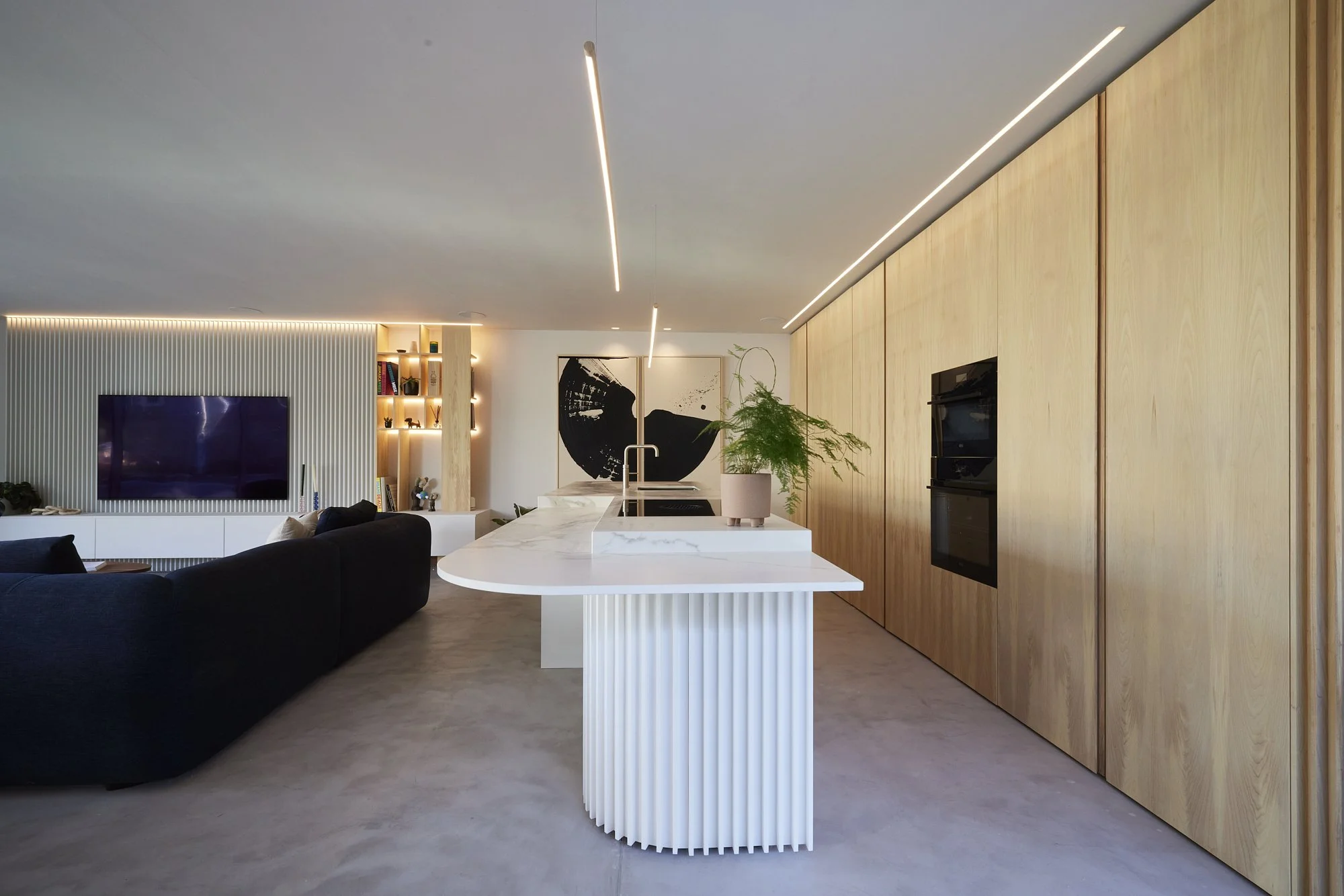
The Role of Layout
Layout is key to creating a successful kitchen within a wider interior.
At Pavillon, the arrangement of the space was carefully considered to improve flow, allowing each area to feel connected while still maintaining its own identity. Subtle zoning through joinery and materials helps define spaces without interrupting the overall openness.
Material Continuity
Materials play a vital role in linking spaces together.
Using consistent tones and finishes across kitchen, dining and living areas helps create a calm and cohesive feel. Rather than introducing contrast for its own sake, a restrained palette allows the space to feel intentional and balanced.
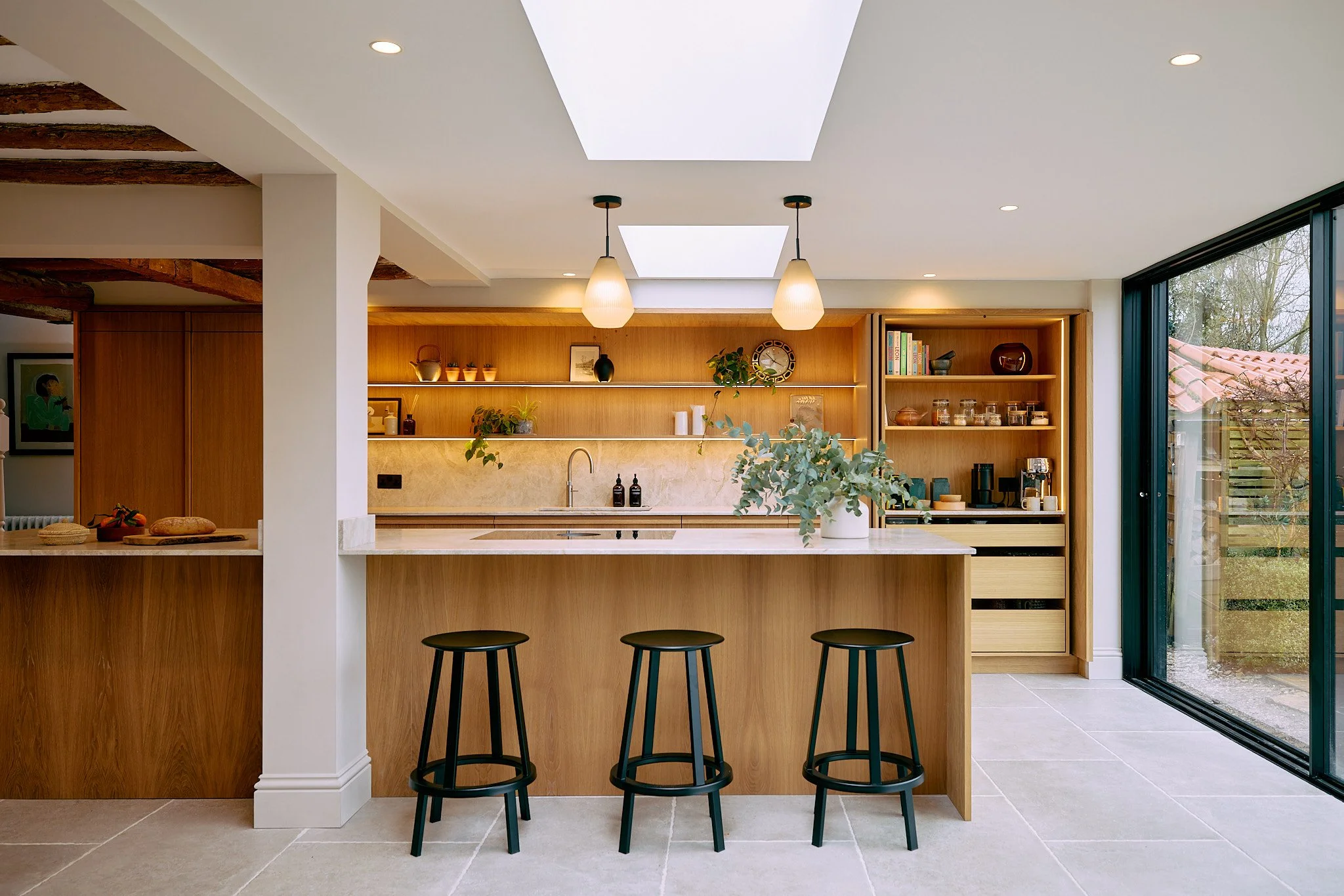
Creating Warmth Through Material
At Farnsfield, natural oak cabinetry and stone worktops were used to introduce warmth and texture into a contemporary extension.
These materials help soften the architecture, creating a kitchen that feels inviting while still maintaining a clean and refined aesthetic. The result is a space that feels both practical and timeless.
Responding to the Building
Every home has its own character, and the kitchen should reflect that.
In more traditional settings, the approach may involve introducing contemporary elements that contrast with the existing structure, while still respecting its context.
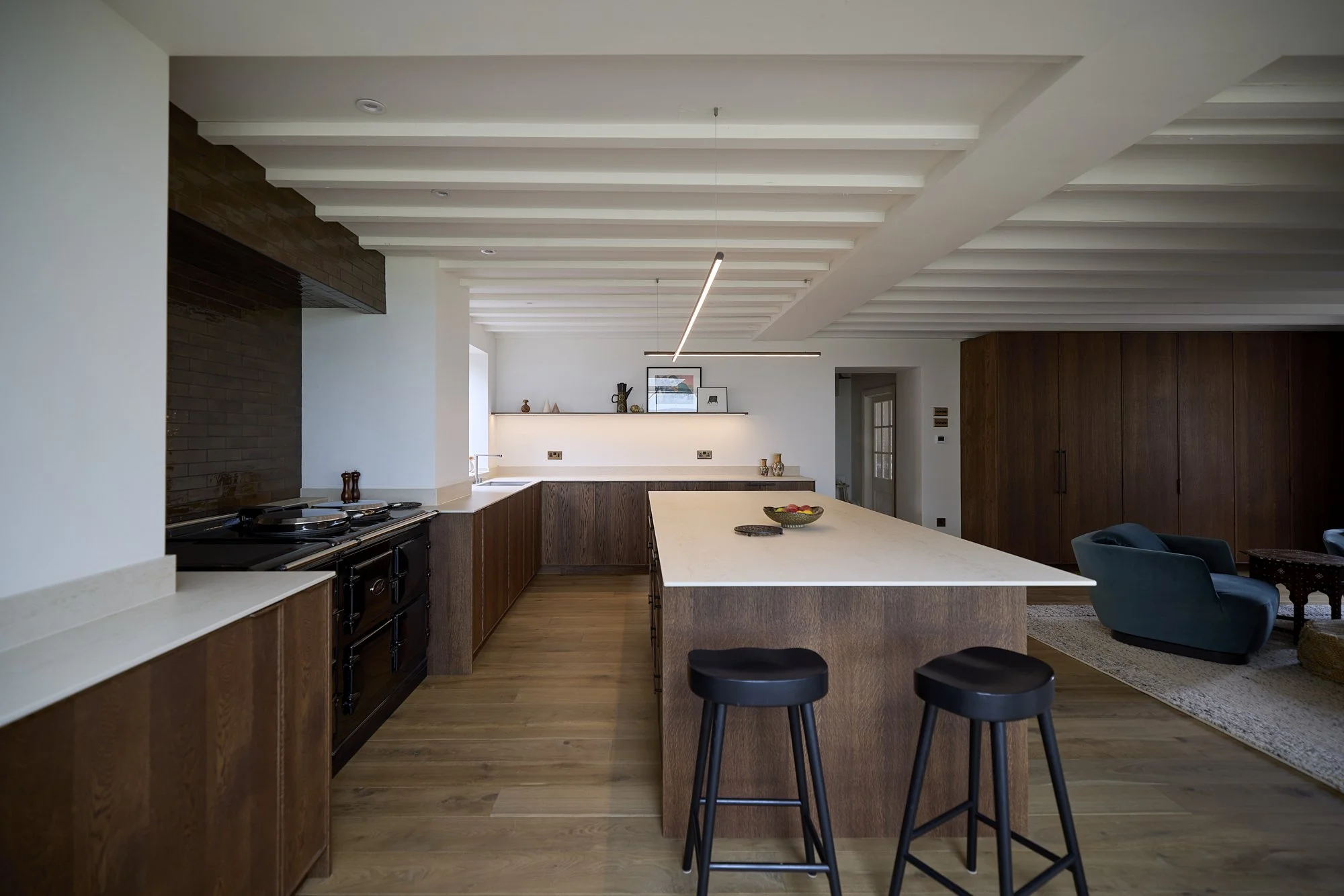
Balancing Old and New
At Old Vicarage in Derbyshire, the kitchen was designed to sit within a more traditional setting while introducing a refined, contemporary aesthetic.
Darker tones and minimalist detailing create a sense of contrast against the character of the existing building, allowing the new elements to feel intentional rather than imitative. By carefully balancing old and new, the space respects its context while offering a clean, modern approach to everyday living.
Conclusion
Designing kitchens as part of the whole home allows for more considered, cohesive interiors.
By focusing on layout, materials and how spaces connect, the kitchen becomes more than a functional area — it becomes an integral part of how the home is experienced.