Designing Around Constraints: Master Bedroom Layout at The Leys
Good interior design begins with understanding the architecture.
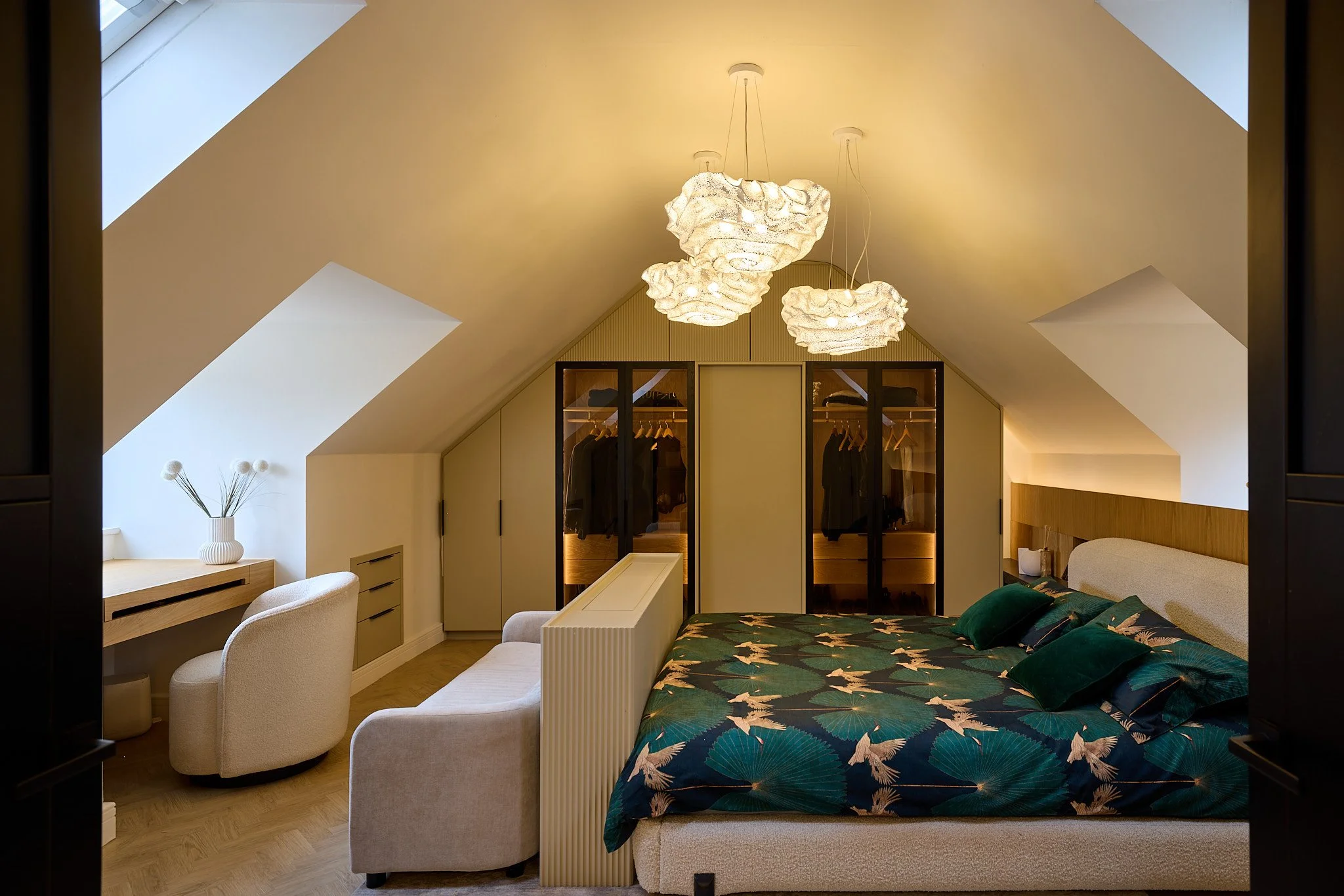
At The Leys, the master bedroom featured sloped ceilings and varied head heights, requiring careful spatial planning. Rather than applying a conventional layout, we explored how the room could be arranged to improve circulation and make the most of its proportions.
By stepping back and reconsidering the placement of key elements, we shaped a layout that feels calm, intuitive and generous.
Rethinking the Bed Position
An early layout option placed the bed centrally within the room. While this created symmetry, it limited circulation and reduced the usable floor area.
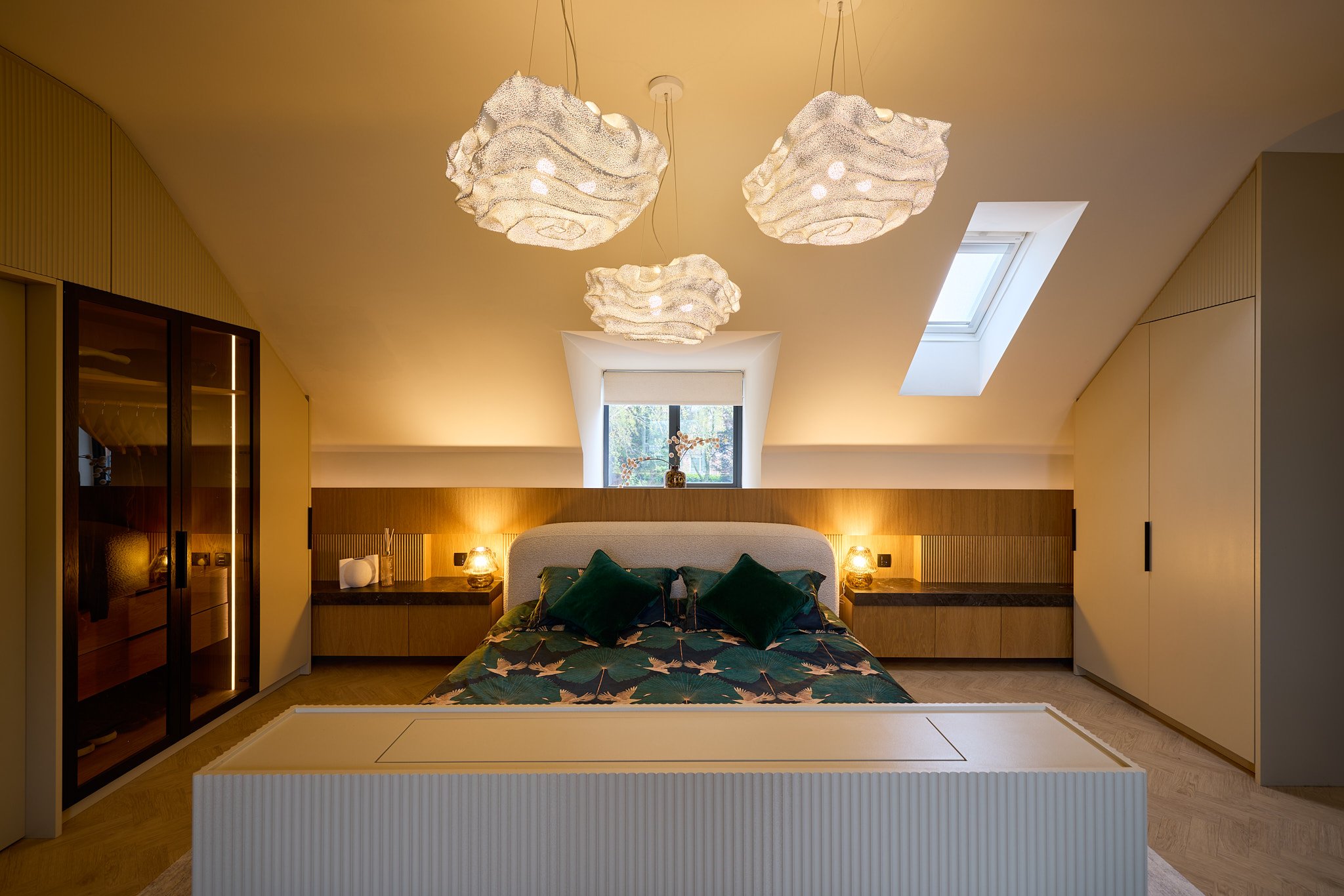
Instead, we positioned the bed along the wall with the lower ceiling height. This simple adjustment immediately improved movement through the space and allowed the room to feel more open.
Working with the architecture — rather than against it — created a more natural and balanced solution.
Integrating Joinery Into the Architecture
Storage was designed as part of the structure of the room, not added as an afterthought.
Wardrobes were positioned either side of the bedroom entrance and extended around the bed, creating a cohesive architectural wall. Within this joinery, a concealed door leads to the ensuite, allowing the storage to read as one unified element.
This approach maintains visual clarity while maximising functionality.
Concealed Functionality
Several practical elements were integrated discreetly into the scheme:
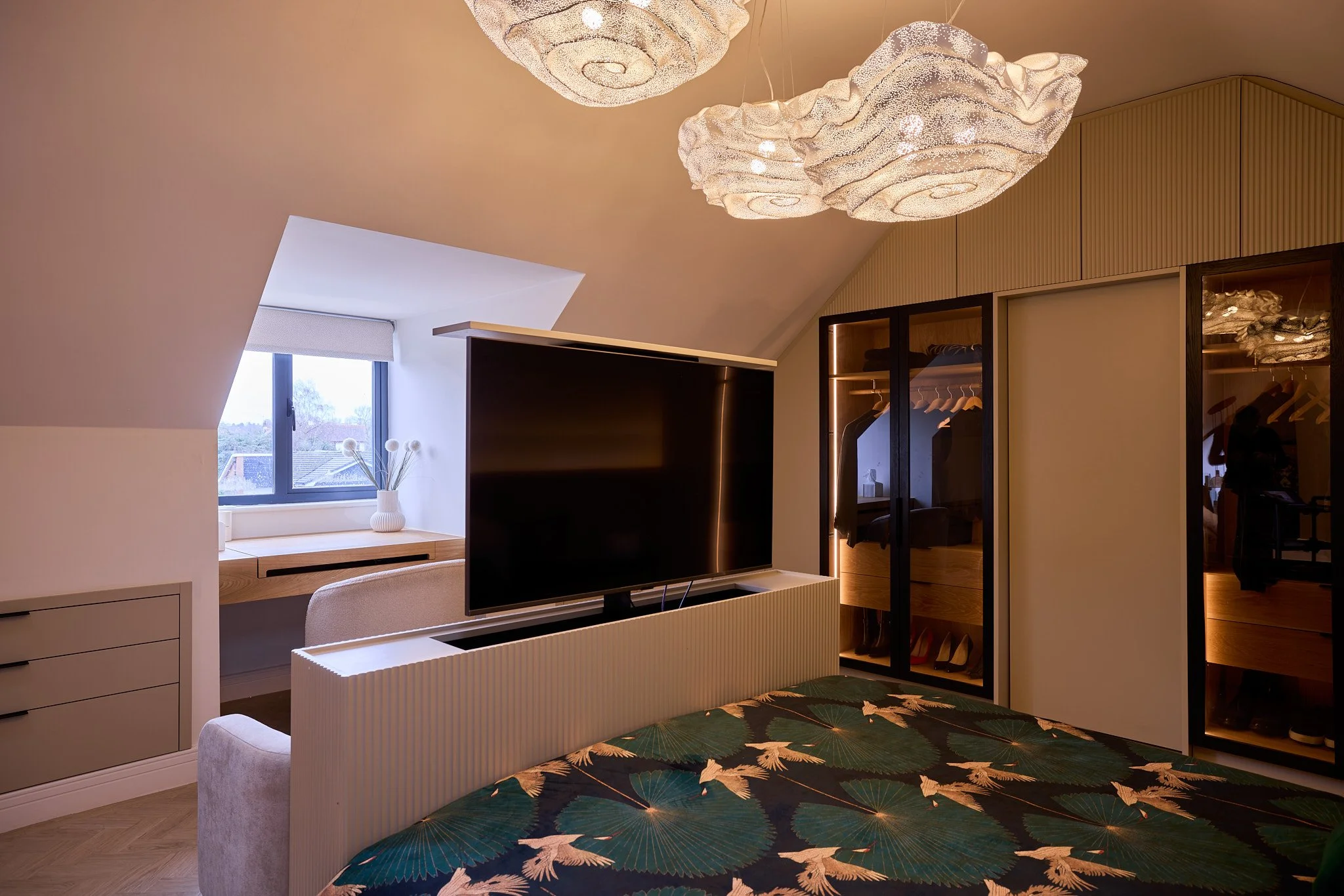
A television that rises and lowers in front of the bed
A dressing table positioned within the dormer recess
A mirror that can open and close, allowing personal items to be concealed
Positioning the dressing table in front of the window allows natural light to support daily routines, while the ability to close the mirror keeps the room visually calm.
Designing for Circulation
Circulation is one of the most important — and often invisible — aspects of interior design.
How you enter the room, move around the bed, access storage, or transition to the ensuite all influence how the space feels. By studying these movements carefully, we created a layout that feels effortless and considered.
The result is a master bedroom that supports daily life while maintaining a sense of calm and cohesion.
The Role of Spatial Planning
Layout decisions often have a greater impact than finishes or colour.
At Boyes Design, spatial planning forms the foundation of every project — from bedrooms and kitchens to whole-home refurbishments. By resolving circulation and proportion first, we ensure that beauty is supported by functionality and that every square metre works with intention.
Boyes Design | Interior Design & Bespoke Joinery
Serving Nottingham, Leicester, Derby, Lincoln, Birmingham & South Manchester